
Essential Care for Your Guinea Pig
Your ultimate guide to a happy and healthy guinea pig.
Nutritional Needs
Understanding the dietary requirements of guinea pigs is crucial for their overall health. They thrive on a balanced diet rich in fresh vegetables, hay, and specially formulated pellets. Avoid feeding them foods high in sugars or fats, as these can lead to serious health issues. Regularly providing vitamin C is essential since guinea pigs cannot produce it on their own. Ensuring they have constant access to clean water is also vital for their hydration and well-being.
Creating a Comfortable Habitat
A comfortable habitat is the foundation of a healthy life for your guinea pig. They require a spacious cage with proper bedding to keep them safe and secure. The enclosure should be placed in a quiet area, away from direct sunlight and drafts. Regular cleaning of their habitat is necessary to prevent odors and maintain hygiene. Additionally, enriching their environment with toys and hideouts can promote mental stimulation and physical activity.
WE DO NOT REHOME TO HOMES WHERE THE GUINEA PIGS WILL BE OUTSIDE ALL YEAR OR HAVE NO HEATING IN THE WINTER IF IN A SHED
If you are keeping them outside in the summer, a hutch with a minimum size of 5ft x 2ft placed outside or in a shed with a window with a separate run attached. The hutch would need to be brought into a shed or garage with heating during the winter months ie September to April. It may also need one or two Snugglesafe heat pads too. Please note that not all hutches are 2ft wide & some only 15" wide which would mean you'd need an 8ft long hutch to give you the same floor area.
WE DO NOT recommended 2-tier hutches.
If planning to keep them in an outdoor hutch during the summer, this should only be done from the end of May until the beginning of October. The hutch should be situated in a shaded area with the front of the hutch facing away from midday sun.
All outdoor runs should be fully enclosed to keep them safe from predators both 4-legged & with wings. They will also need a shaded area by adding a towel etc to the roof to block out the sun.
Routine Health Checks
Routine health checks are essential to catch any potential issues early on. Regularly monitor your guinea pig for changes in behavior, appetite, or physical appearance. Schedule veterinary visits for vaccinations and health assessments, and be vigilant about their dental health, as dental problems are common in guinea pigs.
However there is alot you can do at home to ensure your Guinea's overall health. Keeping a log of their weight and any behaviour changes can help you identify issues before they escalate.. Any signs of illness usually demonstrate themselves in loss of weight.
Common Queries Answered
Find answers to your most pressing questions about guinea pigs.
Where can I find appropriate habitats for the Guinea Pigs I want to adopt?
General habitat guidance
The RSPCA recommended minimum cage size for 1 or 2 guineapigs is 1.2m long by 0.6m wide x 0.45m high (4ft x 2ft x 1ft6in) see;https://www.rspca.org.uk/adviceandwelfare/pets/rodents/guineapigs
The Humane World also has guidance on the matter;
https://www.humaneworld.org/en/resources/guinea-pig-housing-requirements-and-bedding-options
Outside Hutches - for Summer only
https://www.facebook.com/HappyHabitatsHG
B&Q
Indoor Cages
Pair of GuineasSkyline Maxi XXL 1.2m x 0.6m cage from Zooplus. Suitable for 1 or 2 guinea pigs
https://www.zooplus.co.uk/shop/small_pets/hutches_cages/rabbit_cage/120_cm_cages/83034?activeVariant=83034.2
Another 120cm x 60cm cage
https://littlepetwarehouse.co.uk/products/rabbit-120-large-indoor-rabbit-guinea-pig-cage-120x59x50cm-beige-silver/
Our preference is for 140 Ferplast, and they can be found here:
Trio Guinea PigsFerplast Plaza 160: 160cm x 60cm x 50cm
https://www.zooplus.co.uk/shop/small_pets/hutches_cages/rabbit_cage/140_cm_cages/570171?activeVariant=570171.1C&C Runs
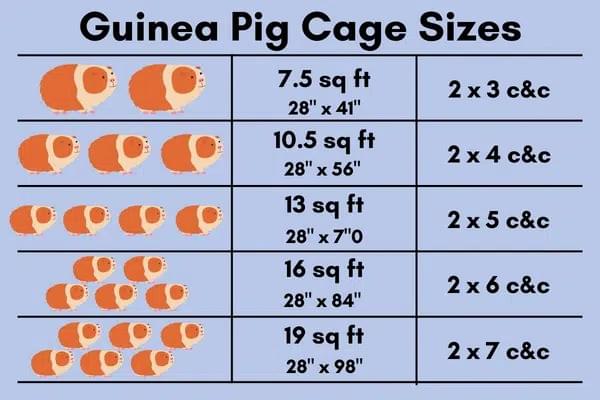
Pair of Guineas3x2 (42" x 28")
Trio of Guineas
4x2
How to build your own C&C Run:
https://www.guineapigcages.com/howto.htm
Lots of pictures of other people's c&c set-ups from TheGuinea Pig Forum:
https://www.theguineapigforum.co.uk/threads/member-gallery-c-c-cages-homemade-cages.53210/
You can find C&C grids to purchase here:Wayfair
Kavee
Amazon
https://www.amazon.co.uk/dp/B07QJ3C6TT/ref=mp_s_a_1_1
If you would prefer a pre-designed C&C set up, there are a number of retailers who sell C&C grid cages however here is a starting point for you:
https://candcguineapigcages.co.uk/
What can I feed my Guinea Pigs?
Good-quality hay should make up most of your guinea pigs' diet, and they should always have it available to them. It should be around 80% of their diet. They naturally graze, eating only grass, herbs and some other plants (such as dandelion or groundsel) for long periods, both day and night.
Fresh vegetables can be offered once a day and should be equivalent to 1/2 to one cup total per guinea pig per day.
Daily Leafy Greens
Leafy greens should comprise the bulk of your pig’s fresh produce.
- Romaine lettuce once or twice a week
- Red and green leaf lettuces
- Saag/Mustard or turnip greens
- Cabbage once a month
- Kale once or twice a week
- Coriander daily
- Parsley once or twice a week
- Spinach once or twice a week
- Mint
It’s best to provide variety by feeding different greens each day.
Vegetables
- Red or green pepper daily
- Broccoli once a month
- Carrots once or twice a week
- Courgette daily
- Tomato once or twice a week
- Sweet potato once or twice a week
- Cucumber
- Celery daily
Fruit
Fruit works well as an occasional treat that is offered once a day or several times a week. Keep the portion size small since fruit is high in sugar
- Kiwis
- Strawberries
- Orange - a small wedge
- Apple - a small wedge
- Blueberries -several
- Banana - thin slice
- Watermelon
Introduce new fruits and veggies gradually to avoid diarrhea. If your guinea pig develops loose stool, reduce the amount of fresh produce for several days, then reintroduce it in smaller portions. Because guinea pigs are susceptible to developing painful bladder stones, and some bladder stones are comprised of calcium oxalate, reducing or eliminating foods high in oxalates—such as spinach, parsley and strawberries—can provide benefit in guinea pigs who develop calcium oxalate stones. A diet high in fresh hay and plenty of fresh water are paramount to preventing urinary issues in guinea pigs.
What is the adoption process at Wheekwood Sanctuary?
Initially, prospective adopters are encouraged to fill out an application form detailing their experience and the environment they can provide. After a review, we conduct an interview to discuss the needs of guinea pigs and answer any questions. Once approved, you can meet the available guinea pigs and select a compatible companion, followed by an adoption fee to help support our rescue efforts.
Quick reference guide to Cage sizes
Knowledge is power!